Why the "analog age" of guesswork is over—and what that means for your smile
As a Dentist, I often tell my patients that the most critical part of their implant journey happens before I ever pick up a handpiece. It happens in the planning phase.
For decades, we relied on 2D X-rays and, frankly, a significant amount of “clinical intuition” (read: educated guesswork) to navigate complex bone structures. But today, the convergence of Artificial Intelligence (AI) and 3D Intraoral Scanning has shifted the paradigm from “predicting” outcomes to engineering them.
Here is how the digital revolution is actively improving our focus, your comfort, and the long-term success of your treatment.
1. Unmatched Clinical Focus (The "Digital Twin")
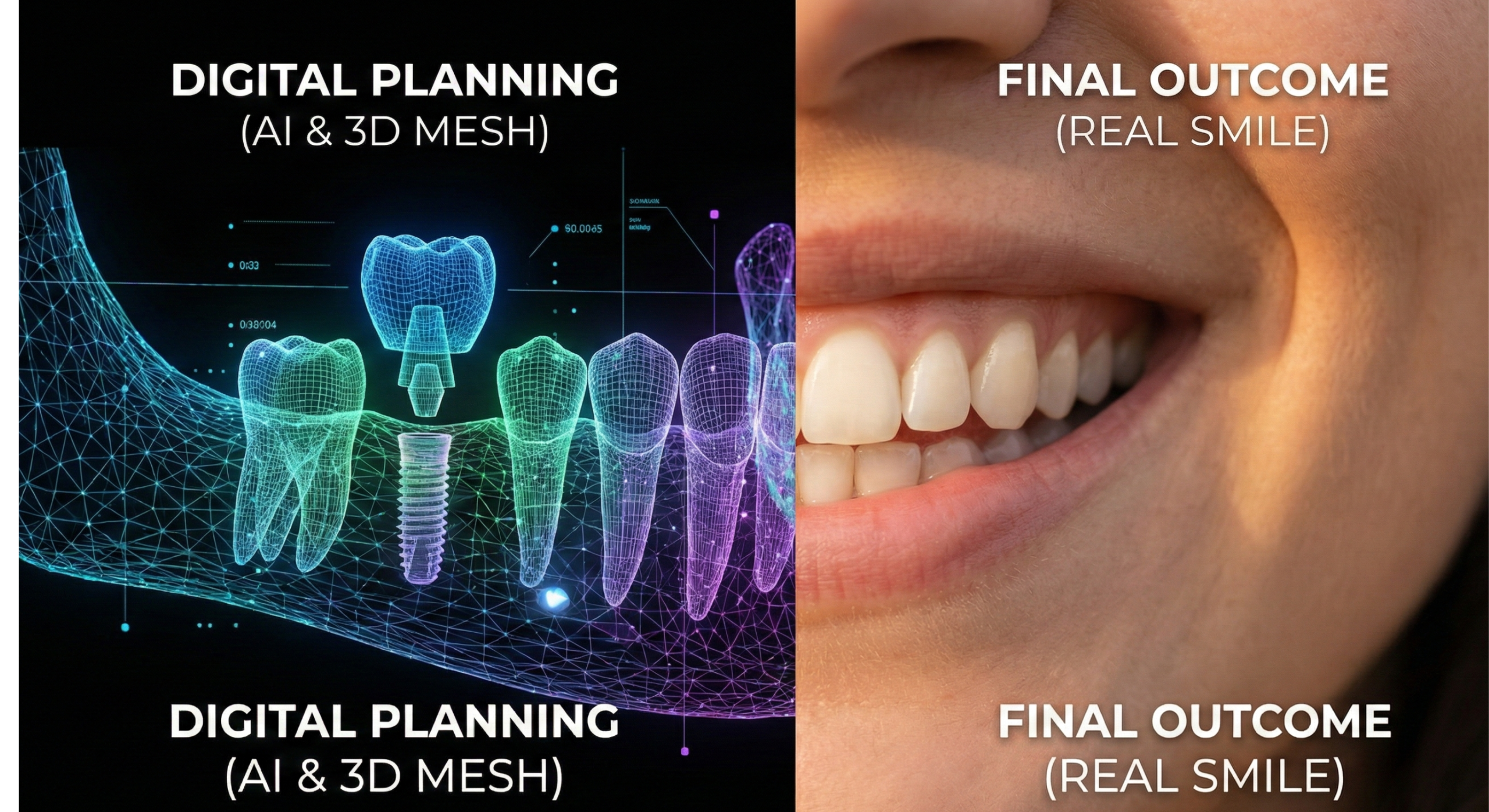
We no longer just look at your teeth; we digitize them. By combining CBCT (Cone Beam Computed Tomography) data with high-resolution intraoral scans, we create a “Digital Twin” of your mouth.
AI algorithms then help us map the terrain with sub-millimeter accuracy. We can identify the exact density of the bone, trace nerve pathways, and simulate the implant placement virtually before surgery. This “measure twice, cut once” digital workflow allows us to fabricate surgical guides that lock in the angle and depth of the implant, removing human error from the equation
2. Redefining Patient Comfort
If you’ve ever had a traditional dental impression, you know the struggle—bulky trays, cold goo, and the dread of the gag reflex.
Digital dentistry retires the “goop.”
- Intraoral Scanning: A small wand captures thousands of images per second, building a 3D model of your teeth in minutes. It is non-invasive, radiation-free, and comfortable.
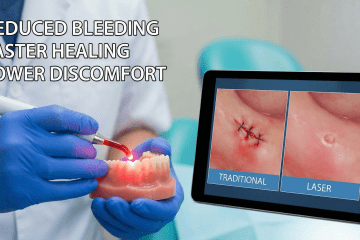
Minimally Invasive Surgery: Because we know exactly where the bone is best, we can often use “flapless” techniques. This means smaller incisions (or none at all), less sutures, and significantly faster healing times.

3. Predictable, Asthetic Outcomes
- The goal isn’t just a tooth that stays in; it’s a tooth that fits AI-driven planning allows us to practice “prosthetically driven implantology.” We don’t just place the screw where the bone is; we place it exactly where the future crown needs to be for a perfect bite and natural aesthetics.
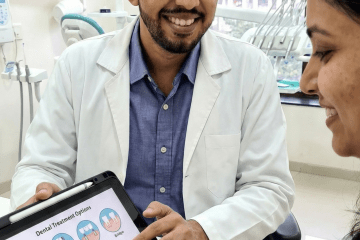
- We can show you the final result on a screen before surgery begins. You become a co-architect of your own smile, seeing the finish line before we start the race.
The Bottom Line
- Technology doesn’t replace the dentist’s hand; it guides it. It turns a complex surgical procedure into a predictable, well-orchestrated event.
- If you have been told you are a “complex case” or have been hesitant about the discomfort of implants, it might be time to see what digital dentistry can do.