
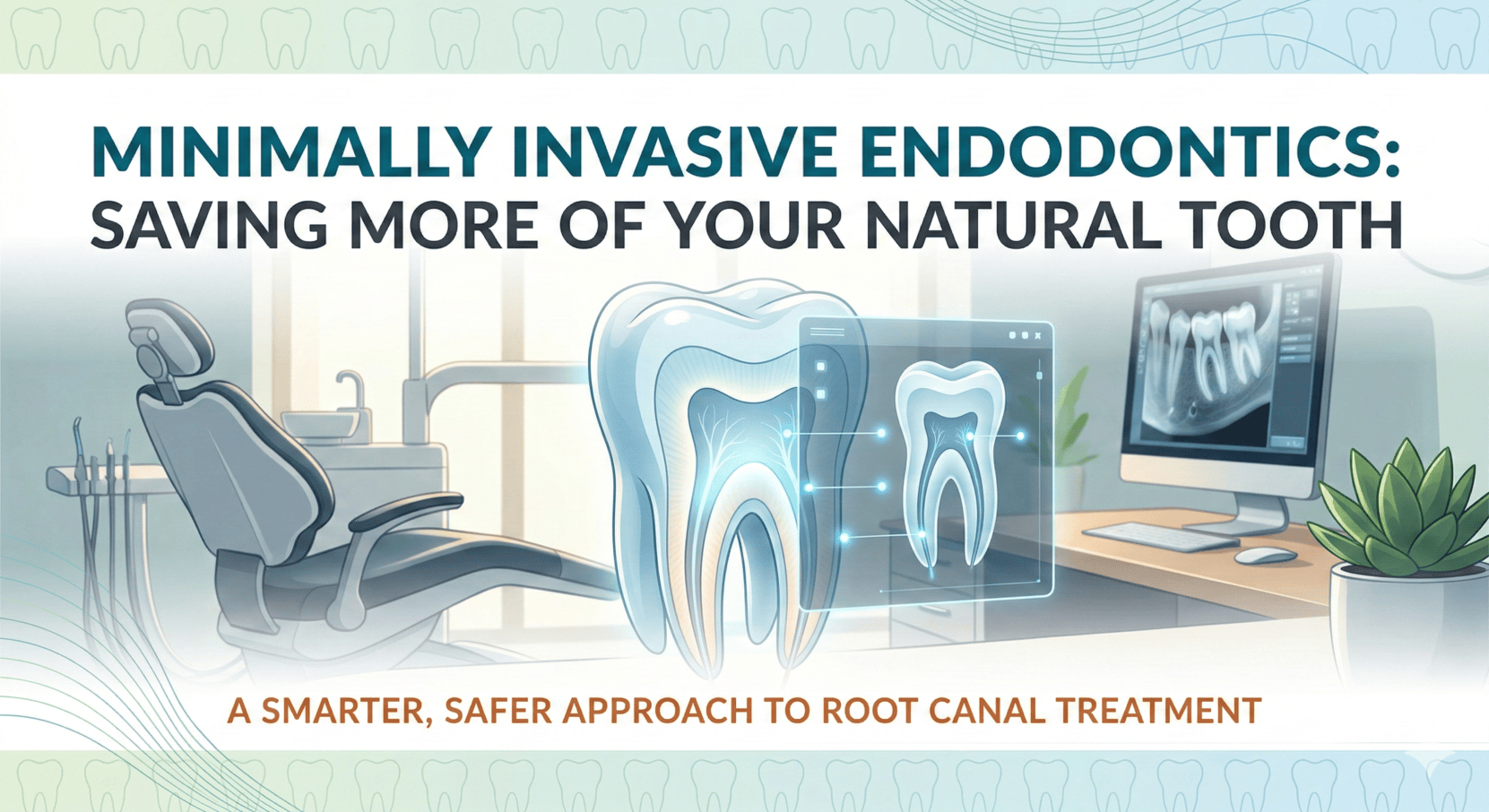
Saving More of Your Natural Tooth – A Smarter, Safer Approach to Root Canal Treatment
When patients hear the words “root canal,” they often feel nervous. But dentistry has changed—dramatically. Today, Minimally Invasive Endodontics: Saving More of Your Natural Tooth is transforming how root canal treatments are performed. This advanced approach focuses on preserving as much of your natural tooth as possible while effectively eliminating infection.
At Dr Rao’s Dental Centre, we believe that your natural tooth structure is precious. The more we preserve, the stronger and healthier your smile remains for years to come. Let’s explore what minimally invasive endodontics really means—and why it could be the best choice for your dental health.
What Is Minimally Invasive Endodontics?
Minimally invasive endodontics is a modern root canal treatment technique designed to remove infection while preserving maximum healthy tooth structure. Unlike traditional methods that required larger access openings, this technique uses advanced technology and precision instruments to:
- Remove only infected tissue
- Maintain structural integrity
- Reduce trauma to surrounding areas
- Improve long-term durability of the tooth
The goal is simple: treat the problem without weakening the tooth.
Why Preserving Natural Tooth Structure Matters
Your natural tooth is stronger than any artificial replacement. Even with crowns and restorations, nothing fully replicates the strength and functionality of your original enamel and dentin.
When excessive tooth structure is removed during treatment, it can:
- Increase the risk of fractures
- Weaken the remaining tooth walls
- Shorten the lifespan of the treated tooth
Minimally invasive endodontics prioritizes structural preservation, which means your treated tooth is more likely to last longer and function better.
How Minimally Invasive Root Canal Treatment Works
- Advanced Diagnostics
Before starting treatment, high-resolution digital imaging and sometimes 3D scans are used to locate infection precisely. This ensures that only the affected area is targeted.
- Conservative Access Preparation
Instead of creating a large opening, your dentist creates a smaller, carefully planned access point. This protects the tooth’s outer structure.
- Precision Cleaning and Shaping
Using flexible, modern rotary instruments, the infected pulp is removed with extreme accuracy. These tools allow thorough cleaning without over-enlarging the canals.
- Biocompatible Sealing
After cleaning, the canals are filled with high-quality materials that seal the space and prevent reinfection.
Benefits of Minimally Invasive Endodontics
Here’s why more patients are choosing this advanced approach:
✔ Greater Tooth Strength
By preserving more natural structure, the tooth remains stronger and more resistant to fractures.
✔ Faster Healing
Less trauma to surrounding tissues often means quicker recovery.
✔ Reduced Discomfort
Smaller access points typically lead to less post-treatment sensitivity.
✔ Improved Long-Term Success
A structurally preserved tooth has better long-term prognosis.
Who Is a Good Candidate?
You may benefit from minimally invasive endodontics if you:
- Have deep decay reaching the pulp
- Experience persistent tooth pain
- Have a cracked tooth with internal infection
- Need retreatment of a previous root canal
During your consultation at Dr Rao’s Dental Centre, a thorough examination will determine whether this technique is suitable for your specific case
Technology That Makes It Possible
Modern dentistry has evolved thanks to innovative tools and equipment. At Dr Rao’s Dental Centre, advanced technologies support minimally invasive procedures, including:
- Digital radiography
- Rotary endodontic systems
- Apex locators for precise measurements
- Magnification tools for enhanced visibility
These technologies allow for precision, efficiency, and superior outcomes.
Is Minimally Invasive Endodontics Safe?
Absolutely. In fact, it is often considered safer than traditional methods because:
- Less healthy tissue is removed
- The structural integrity of the tooth is maintained
- There is reduced risk of procedural complications
When performed by an experienced dentist, minimally invasive root canal therapy is both effective and predictable.
Common Myths About Root Canal Treatment
Let’s clear up a few misconceptions:
Myth 1: Root canals are extremely painful
Modern anesthesia and techniques make the procedure comfortable. Most patients report relief from pain—not additional discomfort.
Myth 2: Extraction is better than root canal
Saving your natural tooth is almost always the best option. Tooth extraction can lead to shifting teeth, bone loss, and additional restorative costs.
Myth 3: Root canals weaken the tooth
Traditional methods could sometimes weaken teeth due to extensive removal of structure. However, Minimally Invasive Endodontics: Saving More of Your Natural Tooth focuses on strength preservation.
What to Expect After Treatment
After your procedure:
- Mild soreness may occur for a few days
- You may need a crown to protect the treated tooth
- Regular dental checkups ensure long-term success
Most patients return to normal activities within 24 hours.
Long-Term Care for Your Treated Tooth
To protect your restored tooth:
- Maintain excellent oral hygiene
- Brush twice daily with fluoride toothpaste
- Floss regularly
- Visit your dentist every six months
With proper care, a tooth treated using minimally invasive endodontics can last a lifetime.
Why Choose Dr Rao's Dental Centre?
Experience matters—especially when it comes to root canal treatment.
At Dr Rao’s Dental Centre, we combine:
- Years of clinical expertise
- Advanced endodontic technology
- Patient-centered care
- Comfortable treatment environment
Our goal is not just to eliminate infection—but to preserve your natural smile for years to come.
Frequently Asked Questions (FAQs)
- Is minimally invasive endodontics more expensive?
Costs may vary depending on complexity, but preserving your natural tooth often reduces long-term expenses related to fractures or replacements.
- How long does the procedure take?
Most treatments are completed in one or two visits, depending on the condition of the tooth.
- Will I need a crown afterward?
In many cases, yes. A crown protects and strengthens the treated tooth.
- Is the procedure suitable for all root canal cases?
Most cases can benefit from a conservative approach, but your dentist will determine the best method.
- How long will the treated tooth last?
With proper care, a root canal-treated tooth can last decades—or even a lifetime.
- What happens if I delay treatment?
Delaying care can lead to severe infection, abscess formation, bone loss, and eventual tooth extraction.
Protect Your Smile – Schedule Your Appointment Today
Tooth pain should never be ignored. The sooner you address infection, the better your chances of saving your natural tooth.
At Dr Rao’s Dental Centre, we specialize in Minimally Invasive Endodontics: Saving More of Your Natural Tooth, ensuring you receive advanced, comfortable, and effective care.
📞 Call Dr Rao's Dental Centre today to book your appointment.
🗓️ Don’t wait until pain worsens—early treatment saves teeth and protects your smile.
Your natural teeth are worth preserving. Let us help you keep them strong for life.


