When you think of treating sleep disorders, you probably imagine a sleep specialist, a specialized clinic, or perhaps the bulky mask of a CPAP machine. You rarely think of your dental hygienist or your bi-annual teeth cleaning.
However, modern dentistry has evolved far beyond cavities and gum health. Today, your dentist is often the first line of defense in identifying a silent, potentially dangerous condition: Obstructive Sleep Apnea (OSA).
While snoring is often the punchline of a joke, for millions of people, it is the sound of their body struggling for air. Here is why your dentist might be the most important partner you have in getting a good night’s sleep.
Why the Dentist? The Anatomy of Airway
You might wonder, why is my dentist asking about my sleep?
The answer lies in anatomy. The mouth is the gateway to the airway. Dentists are the only healthcare providers who spend a significant amount of time looking directly into your oral cavity—where the signs of apnea often hide in plain sight.
During a routine exam, we aren’t just looking at teeth; we are evaluating the “architecture” of your mouth. We look for specific red flags that suggest your airway might be collapsing during sleep:
- Scalloped Tongue: Ridges on the sides of the tongue caused by pressing against the teeth, often indicating a large tongue struggling to fit in the mouth.
- Bruxism (Teeth Grinding): Many patients grind their teeth as a subconscious mechanism to push the jaw forward and open a blocked airway at night.
- A Narrow Palate: A high, narrow roof of the mouth can restrict nasal airflow.
- Throat Structure: We check the visibility of the soft palate and uvula (the Mallampati score) to see how easily the airway could become obstructed.
The Solution: Oral Appliance Therapy (OAT)
For years, the “gold standard” for treating sleep apnea has been the CPAP (Continuous Positive Airway Pressure) machine. While effective, the CPAP has a major flaw: compliance. Many patients find the mask claustrophobic, the machine noisy, or the tubing cumbersome, leading them to abandon treatment entirely.
This is where Dental Sleep Medicine changes the game.
For mild to moderate OSA (and for severe patients who cannot tolerate CPAP), we can prescribe Oral Appliance Therapy.
How It Works
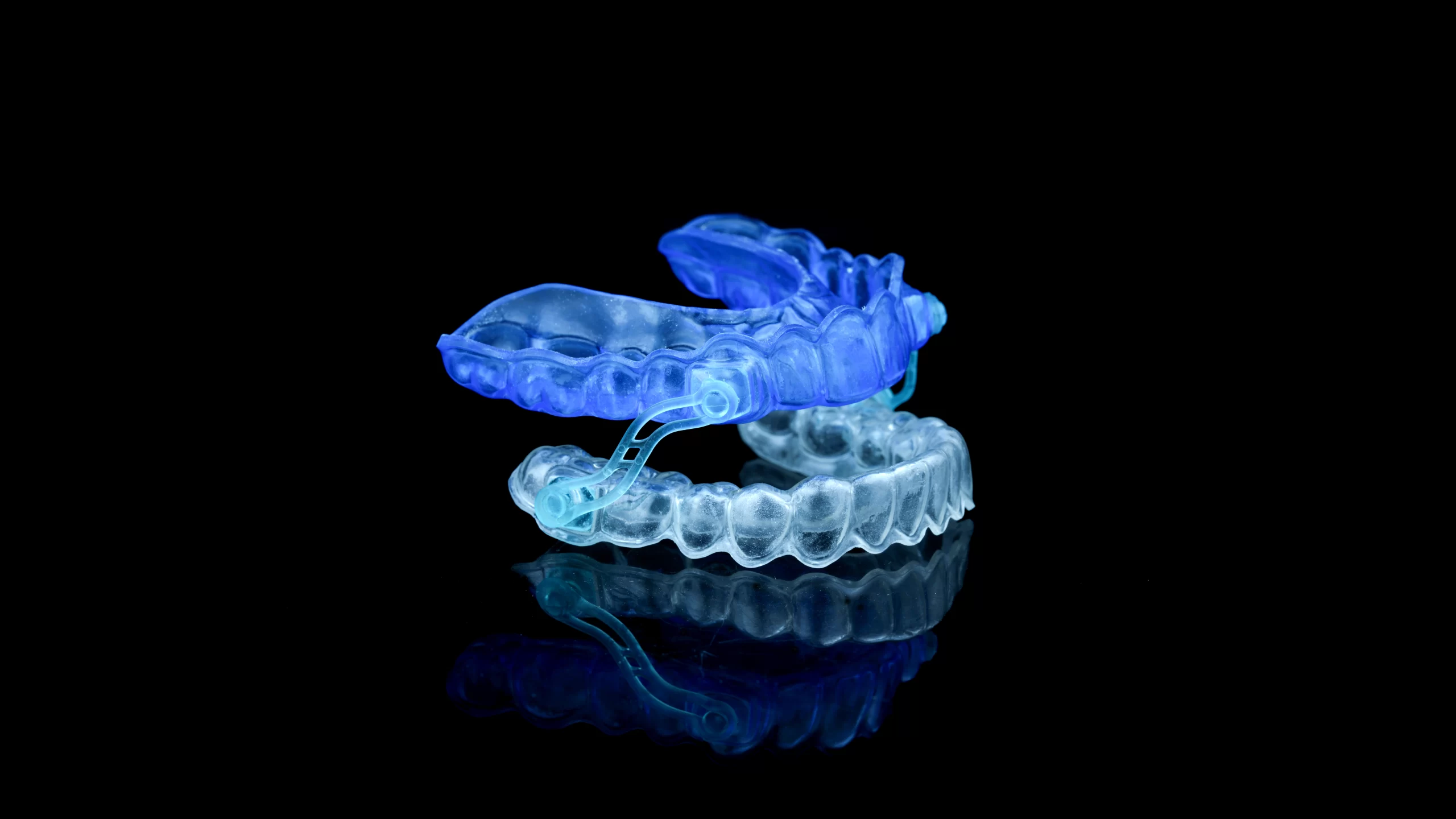
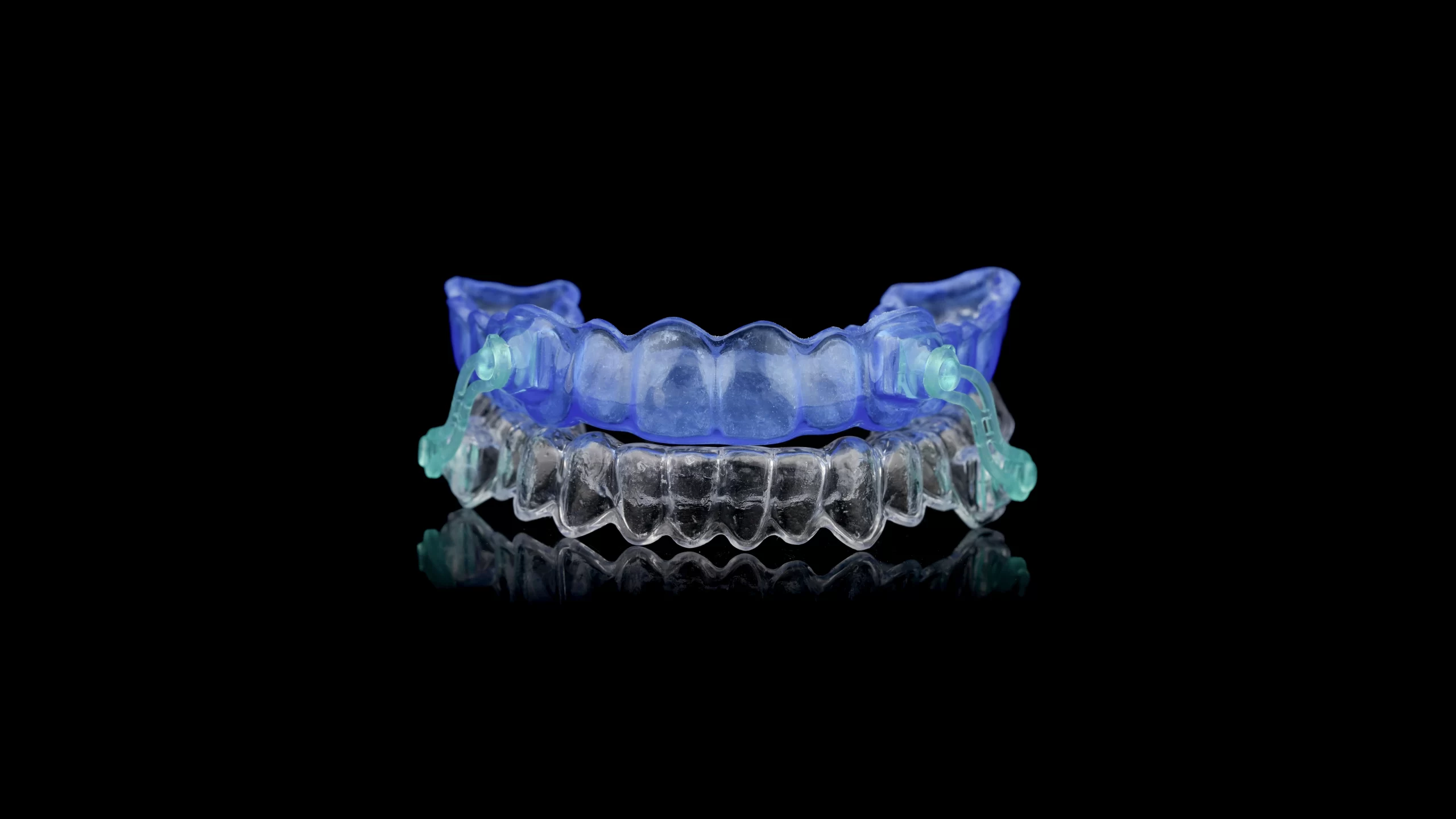
Think of it like a sports mouthguard or an orthodontic retainer, but strictly for sleep. These custom-fitted devices, known as Mandibular Advancement Devices (MADs), fit over your upper and lower teeth.
Their mechanism is simple yet brilliant: they gently position the lower jaw (mandible) slightly forward. This forward movement tightens the soft tissues and muscles of the upper airway, preventing them from collapsing backward and blocking your breath.
The Benefits of Oral Appliances:
- Comfort: No masks, no straps, and no hoses.
- Silence: The device makes no noise, unlike the hum of a CPAP motor.
- Portability: It fits in a pocket, making travel easy.
- High Compliance: Because they are comfortable, patients actually wear them.
A Collaborative Approach to Your Health
It is important to note that while dentists are experts in the airway, the diagnosis of Sleep Apnea is a medical condition. We work in close collaboration with Sleep Physicians.
- Screening: We identify the risk factors in the dental chair.
- Testing: We refer you for a sleep study (often a simple home sleep test) to confirm the diagnosis.
- Treatment: If an oral appliance is the right fit, we take custom impressions and calibrate the device for you.
Don't Ignore the Snore
Untreated Sleep Apnea is linked to high blood pressure, heart disease, stroke, and chronic fatigue. It is not just about a noisy night; it is about your long-term longevity.
If you have been told you snore, or if you wake up feeling tired despite a full night’s rest, mention it at your next dental visit. We can look beyond the teeth and help you breathe easier.
Do you suspect you or a partner might be struggling with Sleep Apnea? We can perform a simple airway screening during your next consultation. Book your consultation today to protect your sleep and your health.