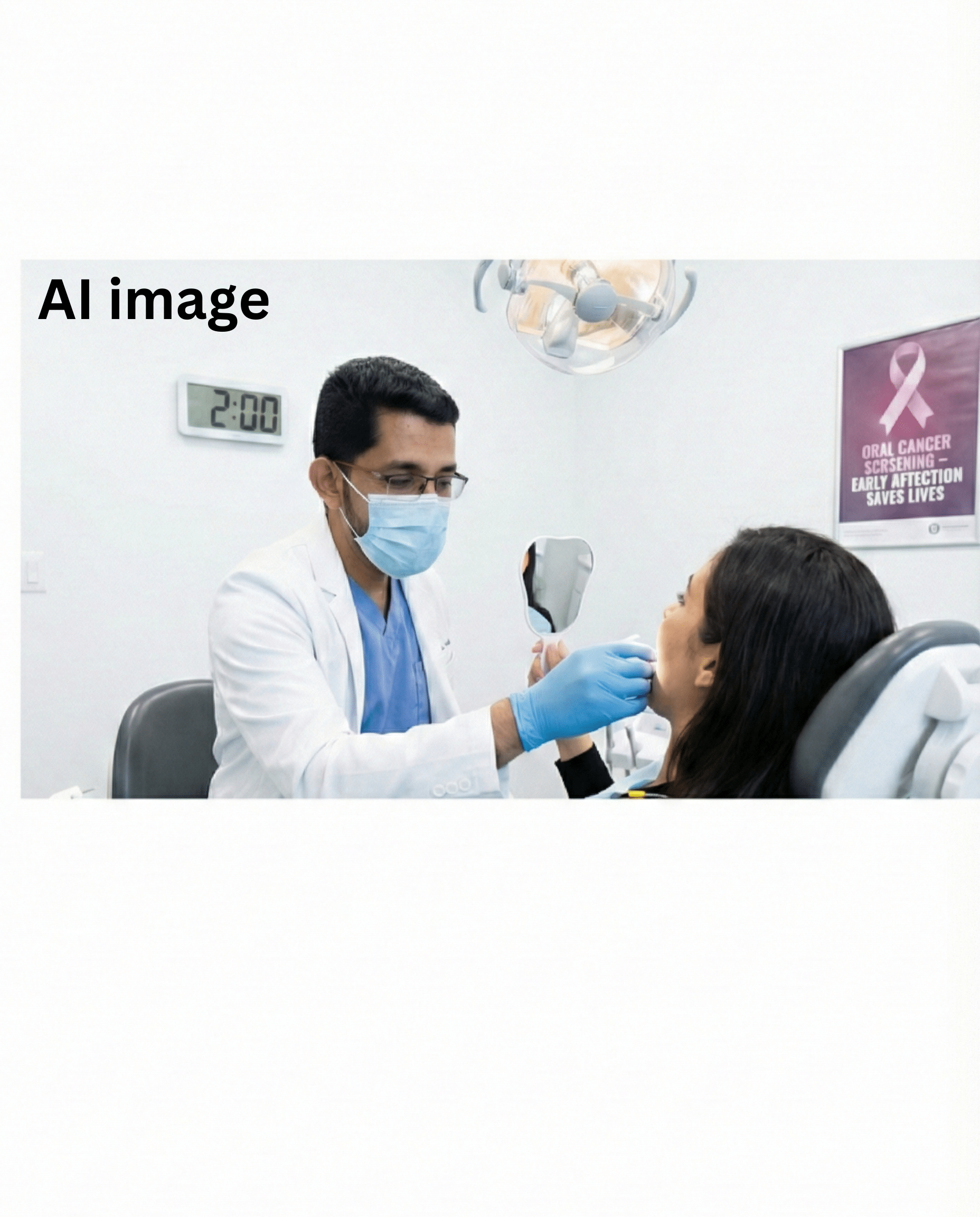
When most patients think about a dental checkup, they picture cleanings, X-rays, and maybe a lecture about flossing. What many don’t realize is that one of the most important parts of a dental visit takes just two minutes—and it can save a life.
Oral cancer screenings are a routine yet powerful exam dentists perform at every comprehensive checkup. As a dentist, this brief examination allows me to detect subtle changes in the mouth that patients often miss—changes that could signal oral cancer in its earliest, most treatable stage.
Because these changes don’t usually interfere with daily life, many people wait months—or even years—before seeking help. Unfortunately, by the time symptoms become obvious or painful, oral cancer may already be advanced.
This is exactly why routine dental screenings are critical.
What Is the 2-Minute Oral Cancer Exam?
An oral cancer screening is a quick, non-invasive examination performed during your dental visit. It typically includes:
- Visual inspection of the lips, cheeks, tongue, gums, palate, and throat
- Gentle palpation of the jaw, neck, and lymph nodes
- Evaluation of tissue color, texture, and symmetry
- In some practices, advanced screening tools such as special lights or fluorescence technology may be used to detect abnormal tissue changes not visible to the naked eye.
- The entire process takes about two minutes, but those two minutes can make a life-changing difference.
The Dentist’s Role in Early Detection
Dentists are uniquely trained to identify abnormal oral tissues. Unlike patients who see their mouth every day and may overlook gradual changes, dentists are trained to recognize:
- Lesions that don’t heal normally
- Asymmetrical tissue changes
- Unusual color variations (red, white, or mixed lesions)
- Thickened or hardened areas beneath the surface
Early-stage oral cancer and precancerous lesions are often only detectable by a trained professional. This is why dentists are often the first healthcare providers to spot oral cancer, long before symptoms appear
Why Early Detection Saves Lives
The survival rate for oral cancer depends heavily on how early it is detected:
- When caught early, oral cancer has a survival rate of over 80–90%
- When detected late, survival rates drop dramatically
Early detection often means:
- Less aggressive treatment
- Better outcomes
- Reduced impact on speech, chewing, and appearance
- Higher quality of life
In many cases, identifying and monitoring a precancerous lesion can prevent cancer from developing at all.
Who Is at Risk? (Hint: More People Than You Think)
While tobacco and alcohol use are well-known risk factors, oral cancer doesn’t discriminate. Increased risk is also associated with:
- HPV (human papillomavirus)
- Excessive sun exposure (lip cancer)
- Age over 40
- Weakened immune system
- Family history of cancer
Importantly, a growing number of oral cancer cases are appearing in younger, otherwise healthy individuals, particularly those linked to HPV. This makes routine screenings essential for everyone—not just high-risk patients.
What Patients Often Miss—but Dentists Don’t
Patients rarely inspect areas like:
- The underside of the tongue
- The back of the throat
- The floor of the mouth
- The inner cheeks
These are common sites for oral cancer. Dentists, however, examine these areas carefully at every visit. What looks like a harmless spot to a patient may raise an immediate red flag to a trained eye.
A Simple Step With a Powerful Impact
Oral cancer screenings don’t require needles, lab work, or discomfort. They simply require showing up for regular dental visits.
As a dentist, I’ve seen firsthand how early detection changes outcomes. I’ve also seen how delayed diagnosis can complicate treatment. That’s why I believe the oral cancer screening is one of the most important services we provide—even if it only takes two minutes.
Don’t Skip the Exam That Could Save Your Life
When you visit your dentist, you’re not just caring for your teeth—you’re protecting your overall health. That quick oral cancer screening is more than routine; it’s a lifesaving preventive measure.
If it’s been a while since your last dental visit, or if you’ve noticed any unusual changes in your mouth, schedule an appointment. Two minutes is a small investment for peace of mind—and it just might save your life.