Why Your Gums Matter More Than You Think
As dentists, we have long understood that oral health goes beyond teeth. Today, growing scientific evidence reinforces what modern dentistry — especially periodontal medicine — has been emphasizing for years: the health of your gums is closely linked to your overall systemic health, including your heart.
Patients often ask:
“Is tooth plaque the same as artery plaque?”
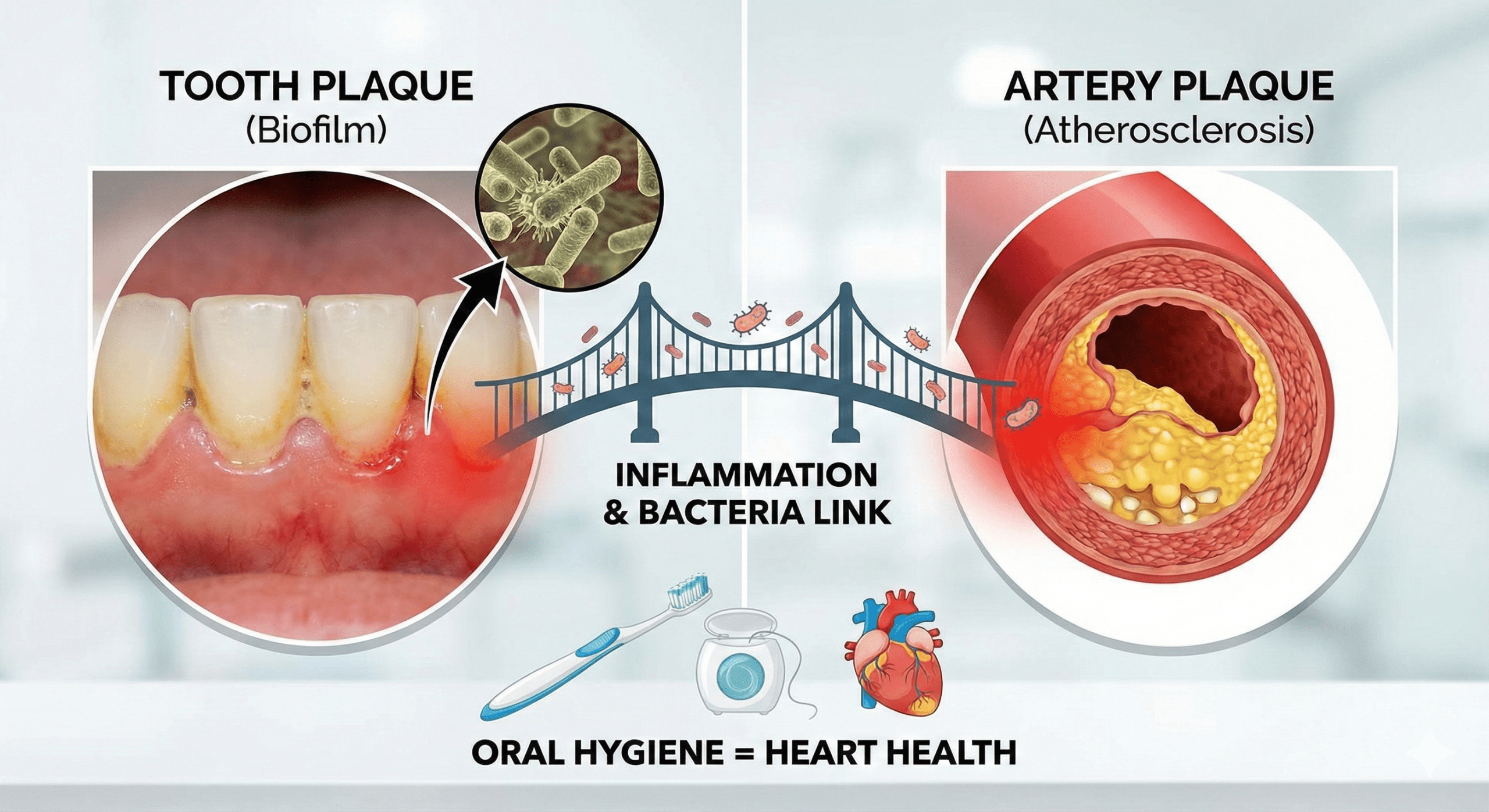
The short answer is no — but the connection between them is very real, and it lies in chronic inflammation
This is where periodontal medicine plays a critical role
Understanding Tooth Plaque Through a Periodontal Lens
Tooth plaque is a living bacterial biofilm that forms naturally on teeth and along the gumline. When plaque is not removed effectively, harmful bacteria multiply and trigger inflammation in the gums.
From a periodontal medicine standpoint, plaque is not just a local dental issue — it is the starting point of an inflammatory disease process.
If left untreated, plaque leads to:
- Gingivitis (reversible gum inflammation)
- Periodontitis (chronic gum infection)
- Bone loss around teeth
- Persistent bleeding and infection
Most importantly, periodontal disease allows bacteria and inflammatory mediators to enter the bloodstream, creating effects far beyond the mouth.
What Is Artery Plaque — and Why Dentists Care About It
Artery plaque (atherosclerosis) is made up of fats, cholesterol, calcium, and inflammatory cells that build up inside blood vessels. Over time, this plaque narrows arteries and increases the risk of:
- Heart attacks
- Strokes
- High blood pressure
While artery plaque is not caused by tooth plaque, both conditions share a common biological driver: inflammation.
From a periodontal medicine perspective, chronic gum inflammation can:
- Increase systemic inflammatory markers
- Disrupt vascular health
- Contribute to endothelial dysfunction (damage to blood vessel lining)
This is why dentists today are increasingly involved in conversations about cardiovascular risk and inflammation management.
The Periodontal Medicine Connection: Inflammation Is the Link
Periodontal medicine focuses on the relationship between gum disease and systemic conditions such as:
- Cardiovascular disease
- Diabetes
- Respiratory disease
- Pregnancy complications
When gums are inflamed and infected:
- Oral bacteria can enter the bloodstream through bleeding gums
- The immune system remains in a constant inflammatory state
- This chronic inflammation may worsen existing cardiovascular conditions
Research has even detected oral bacteria inside arterial plaques, highlighting the biological link — though tooth plaque does not directly “turn into” artery plaque
As dentists, we view gum disease as a chronic inflammatory condition, not just a dental problem
Why Bleeding Gums Are a Medical Warning Sign
One of the biggest misconceptions we see in practice is:
“Bleeding gums are normal.”
They are not.
Bleeding gums are often the first visible sign of periodontal inflammation. In periodontal medicine, bleeding is a red flag that:
- The body is fighting infection
- Inflammatory mediators may be circulating systemically
- The condition may progress silently if ignored
Ignoring gum disease means allowing chronic inflammation to persist — something no medical professional would recommend
Periodontal Treatment as Preventive Healthcare
From a periodontal medicine standpoint, treating gum disease is a form of preventive healthcare.
Professional periodontal care helps:
- Reduce bacterial load
- Control chronic inflammation
- Support better glycemic control in diabetics
- Potentially lower systemic inflammatory burden
This is why dentists now work more closely with physicians, cardiologists, and diabetologists — because oral health and medical health are deeply interconnected
What Patients Can Do to Protect Gum and Systemic Health
As dentists, we recommend a comprehensive approach:
Daily Oral Care
- Brush twice daily with proper technique
- Clean between teeth to disrupt plaque biofilm
- Use dentist-recommended oral hygiene aids
Professional Periodontal Evaluation
- Regular dental check-ups and cleanings
- Early screening for gum disease
- Periodontal assessments for at-risk patients
Lifestyle & Medical Awareness
- Manage diabetes and cardiovascular risk factors
- Avoid tobacco use
- Maintain regular medical and dental follow-ups
Periodontal medicine is about early intervention, prevention, and collaboration — not just treatment.
Final Perspective from a Dentist
Tooth plaque and artery plaque are different in structure and location — but they are connected through the body’s inflammatory response.
Your mouth is not isolated from your body.
Healthy gums support a healthier system.
This is the core principle of periodontal medicine — and it’s why modern dentistry plays a vital role in overall healthcare.
As dentists trained in periodontal care, our goal is not just to treat teeth — but to manage oral inflammation that can impact your overall health.
If you experience:
- Bleeding gums
- Bad breath
- Gum recession
- Loose teeth
- Or haven’t had a dental check-up recently
👉 Schedule a comprehensive periodontal evaluation with our clinic today.
Early diagnosis and timely care can help protect your gums, your smile, and your long-term health.
Your oral health is medical health — and we’re here to help you take control of it.